
Exhibit Artifacts
Step into the story of hops in America.
These artifacts are more than tools; they are the tangible heartbeat of an industry that defined the Pacific Northwest. From the grit of the harvest fields to the precision of the processing floor, this collection offers a glimpse into the innovation and heritage you'll experience firsthand when you walk our halls.
The Foundation: Roots of the Industry

Hop Family Photographs
Hops aren't just a crop; they are a legacy. Our collection captures the faces of the Pacific Northwest families who built this industry. In these frames, you'll see more than just work -- you'll see the generations of daily life and community bonds that turned the Yakima Valley into the hop capital of the world.
Hop Rhizome
Even massive hop vine starts here. This weathered rhizome was the 'engine' under the soil, anchoring the plant and fueling its climb toward the sun, season after season. It's a rare look at the hidden strength that supports the towering trellises you see in the fields today.

In the Fields: The Hard Work of Harvest

Hop Harvest Basket
Before modern harvesters, the rhythm of the season was measured by the basket. These containers were filled by hand, one cone at a time, and hauled across the fields to be weighed. It was back-breaking work, but it was the only way to ensure the delicate cones made it from the vine to the kiln intact.
Sprayer
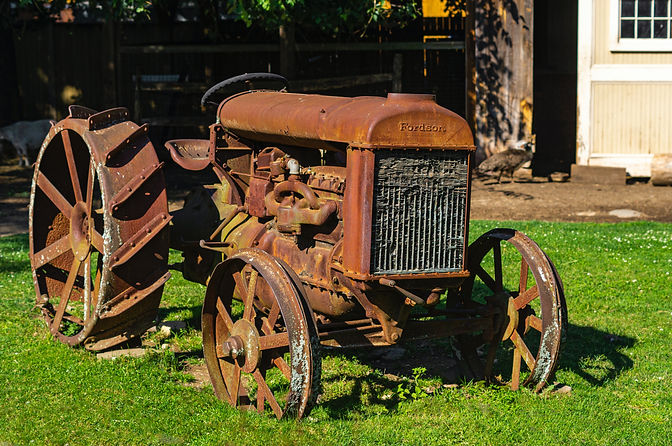
Long before tractors hummed through the rows, the steady 'clip-clop' of a horse team lead the way. This horse-drawn sprayer represents the era of patience, where protecting the crop meant walking every mile of the field at a living pace to ensure a healthy harvest.


Handpicking Hops
At the height of the harvest, the fields were alive with people. This snapshot captures the 'handpicking era,' a time when men and women worked side-by-side to carefully strip the vines. It was a social, sun-drenched, and exhaustive tradition that defined rural life for decades.
The Art of Processing: From Vine to Bale
Hand Wheel Baler
This is where the harvest took its final form. As the bale grew denser and harder to press, the operator would slide the handle to the out edge of this massive wheel for more leverage. I:t's a testament to the physical grit required to turn loose flowers into the 200-pound bales ready for transport.


Hop Merchant Stencil Kit
Think of this as the merchant's signature. When a deal was struck on the farm, the merchant used this kit to mark the burlap bales. These stencils didn't just identify the weight -- they signaled that these Yakima hops were ready to head to breweries across the globe.
The Final Pour: Celebrating the Harvest
Beer Tap Pulls
The journey from the soil ends at the glass. This collection of retired tap pulls tells the story of the breweries that turned our local hops into world-class beer. Each one represents a different era of design and a different style of brewing, showcasing the final, celebrated result of the farmer's hard work.
